



GPS Asset Tracking for Small Businesses: A Practical 2026 Guide
Share
GPS Asset Tracking for Small Businesses: A Practical 2026 Guide
For a small business, your equipment is your business. A stolen generator, a misplaced trailer, or a tool cart that walks off a job site can cost you far more than the equipment itself — it costs you downtime, missed deadlines, and money you never budgeted for. This is exactly where GPS asset tracking earns its keep. By attaching a small tracker to the things that matter, you always know where your assets are, whether they're moving, and whether anyone is using them without permission.
In this guide we'll break down how GPS asset tracking works, what to look for in a tracker, and how small businesses in India are using it to cut losses and run tighter operations.
What Is GPS Asset Tracking?
GPS asset tracking is the use of small, often battery-powered devices to monitor the location and status of your physical assets in real time. Unlike a vehicle tracker wired into a car, an asset tracker for business is designed to be attached to almost anything — trailers, construction equipment, tool boxes, shipping containers, portable generators, or high-value inventory.
Each device reports its position over the cellular network to an app or web dashboard. From your phone, you can see every asset on a map, set alerts, and review where something has been. The result is simple but powerful: nothing you own disappears without you knowing.
How It Actually Works
The tracker receives signals from GPS satellites to calculate its exact location, then sends that data over a SIM-based cellular connection to the cloud. You view it through an app. Depending on the device, updates can arrive every few seconds for real-time asset tracking, or once or twice a day to stretch battery life for equipment that sits still for long periods.
Why Small Businesses Need Asset Tracking
Larger fleets have used tracking for years, but the biggest gains often go to small operators who feel every loss directly. Here's where a GPS tracker for equipment pays off:
- Theft recovery. If a trailer or machine is stolen, live location data helps you and the police recover it quickly — often before it's stripped or resold.
- Preventing loss on job sites. Tools and equipment move between crews and sites. Tracking tells you exactly where each item ended the day.
- Utilisation insight. See which machines are actually being used and which are sitting idle, so you can right-size what you own or rent.
- Accountability. Geofence alerts notify you the moment an asset leaves an approved location or moves after hours.
- Lower insurance risk. Some insurers view tracked assets more favourably, and recovery rates improve claims outcomes.
Types of Asset Trackers to Consider
Not every asset needs the same device. Matching the tracker to the job keeps costs down and battery life up.
Battery-Powered Trackers
These are the workhorses of asset tracking. With no wiring required, you simply place or magnetically attach them to equipment. Battery life ranges from weeks to a few years depending on how often the device reports. Ideal for trailers, containers, and equipment without a power source.
Hardwired Trackers
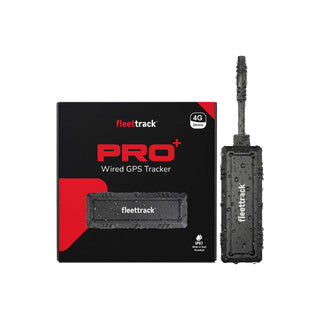
For assets with their own battery or power supply — like heavy machinery or refrigerated units — a hardwired tracker draws power directly and can report continuously without you ever recharging it.
Compact Hidden Trackers
Small, discreet units are best for high-theft items where you don't want the tracker to be found and removed. Because they're hidden, they act as a genuine recovery tool rather than just a deterrent.
What to Look For in a Business GPS Tracker
When comparing devices for GPS tracking for tools and equipment, weigh these factors before you buy:
- Battery life vs. update frequency. More frequent updates mean shorter battery life. Decide whether you need live tracking or a once-a-day check-in.
- Recurring costs. Cellular trackers usually need a SIM plan. Factor the monthly or annual cost per device into your budget.
- Geofencing and alerts. The ability to draw a boundary and get instant notifications is one of the most useful features for small teams.
- Durability. Look for weatherproof (IP67 or higher) housings for outdoor and job-site use.
- Multi-device dashboard. One app to manage every asset saves real time as you grow.
Getting Started: A Simple Rollout
You don't need to track everything at once. Start with your highest-value or most theft-prone assets — the trailer, the generator, the tool cart — and expand from there. Set up geofences around your yard and regular job sites, turn on movement alerts, and give the app to whoever manages your equipment. Within a week you'll have a clear picture of how your assets actually move.
Frequently Asked Questions
How much does GPS asset tracking cost in India?
Device prices vary by type and battery life, and most cellular trackers add a modest SIM/data plan billed monthly or yearly. For small businesses, the cost per asset is usually a small fraction of what a single theft or lost machine would cost, which is why most owners recover the expense quickly.
Do asset trackers work without a SIM card?
Most real-time GPS trackers use a SIM to send location data over the cellular network, so they do need an active data plan. Some devices store location data locally and sync when connected, but for live tracking and instant alerts, a SIM-based connection is standard.
Can I track multiple assets from one app?
Yes. Modern platforms let you view every tracked asset on a single map, name each device, set individual geofences, and pull location history — all from one phone or web dashboard, which makes managing a growing set of equipment straightforward.
Protect Every Asset You Own
GPS asset tracking turns "I hope it's still there" into "I know exactly where it is." Whether you're securing trailers, tools, or heavy equipment, the right tracker pays for itself the first time it prevents a loss.
Explore Fleettrack's range of GPS trackers → and find the right device to protect your business assets today.