



How Does GPS Tracking Work? A Simple Guide for Car Owners
Share
If you have ever watched a delivery move across a map in real time or found your parked car from your phone, you have already seen GPS tracking in action. But how does GPS tracking work behind that little moving dot? The short answer is a conversation between satellites orbiting the earth and a small device in your vehicle. This guide breaks the whole process down in plain language, so you understand exactly what a GPS vehicle tracking system does before you buy one.
How Does GPS Tracking Work? The Basics
GPS stands for Global Positioning System, a network of around 30 satellites circling the earth roughly 20,000 km up, originally built by the US government and now free for anyone to use. Each satellite continuously broadcasts a radio signal that includes its exact position and the precise time the signal was sent.
A GPS receiver — the chip inside your car tracker or phone — listens for these signals. To work out where it is, the receiver needs signals from at least four satellites. Here is the clever part: the receiver measures how long each signal took to arrive. Because radio waves travel at the speed of light, that tiny time delay tells the device exactly how far away each satellite is. This method is called trilateration.
With distances from four or more satellites, the device can pinpoint its own location in three dimensions — latitude, longitude, and altitude. This calculation happens several times per second, which is why the moving dot on your map looks smooth and continuous.
Trackers vs Navigation: Two Sides of the Same Signal
It helps to separate two things that both use GPS. Your phone’s maps app or a car’s built-in navigation is a GPS receiver that shows you where you are. A GPS tracker does the same location math, but then sends that position somewhere else so someone else can see it — a fleet manager, a parent, or you checking your phone from home.
That second step is what turns raw positioning into a useful tracking product, and it is where most of the real technology lives.
How a GPS Tracker Sends Your Location
Working out a location is only half the job. A GPS tracker also has to deliver that information to you. Most modern trackers do this using a built-in SIM card and the mobile network — the same 4G data your phone uses.
The process runs in a loop:
- The tracker’s GPS receiver calculates the vehicle’s current position.
- The tracker packages that position, along with speed, direction, and time.
- It sends that data over the cellular network to a cloud server.
- You open an app or website, which pulls the latest data from that server and drops a pin on a map.
A real-time GPS tracker for a car repeats this cycle every few seconds, so what you see is close to live. Simpler or battery-saving trackers might update every few minutes or only log the route to review later. This is the core difference between real-time (active) and passive tracking.
What Affects GPS Tracking Accuracy
A good GPS vehicle tracking system is usually accurate to within about 5 metres in open conditions, but a few things influence how precise it is:
- Clear sky view: Satellites need a relatively unobstructed line of sight. Open highways give the best accuracy.
- Tall buildings and tunnels: Dense city centres can bounce signals around (the “urban canyon” effect), and tunnels or underground parking block them entirely.
- Number of satellites locked: More satellites in view means a tighter, more reliable fix.
- Quality of the chip and antenna: Better hardware locks on faster and holds the signal in weaker conditions.
Many trackers also use the mobile network and nearby WiFi points as a backup to estimate location when satellite signals are weak, so you rarely lose the dot completely.
Why GPS Tracking Matters for Car and Fleet Owners
Once you understand how the pieces fit together, the practical value is obvious. For a single car, a tracker means theft recovery, knowing a family member arrived safely, and a full history of where the vehicle has been. For a business running several vehicles, a GPS tracking system turns that same data into route optimisation, fuel savings, proof of delivery, and driver accountability — all from one dashboard.
The technology that felt like science fiction a generation ago now fits in a device smaller than a matchbox and costs a fraction of what it once did.
Frequently Asked Questions
Does a GPS tracker need internet or a SIM card to work?
The GPS receiver itself does not need internet to figure out its location — it only listens to satellites. However, to send that location to your phone in real time, the tracker needs a data connection, which is why most car trackers include a SIM card. Passive loggers can store the route offline and be read later without any SIM.
How accurate is GPS vehicle tracking?
In open conditions, most consumer and fleet GPS trackers are accurate to roughly 2 to 5 metres. Accuracy can drop in tunnels, underground parking, or between very tall buildings where the satellite signal is blocked or reflected, but it usually recovers as soon as the vehicle returns to open sky.
Can GPS tracking work without a monthly subscription?
Yes. The GPS satellite signal is completely free to use. What sometimes carries a fee is the SIM data plan and the tracking software platform. Some trackers bundle these costs into a one-time price with no monthly fee, while real-time fleet platforms typically charge a small recurring amount for live data and reporting.
Ready to Track Your Vehicle?
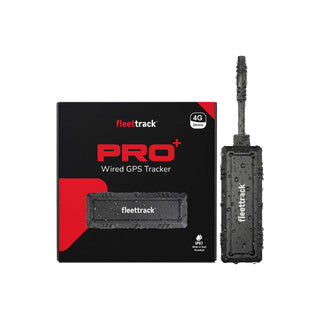
Now that you know how GPS tracking works, the next step is choosing a device that fits your needs. Fleettrack offers reliable real-time GPS trackers for cars, bikes, and fleet vehicles, with live location, alerts, and easy setup. Explore GPS trackers at Fleettrack →