

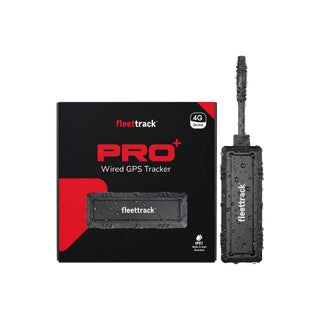


OBD GPS Tracker: The Easiest Way to Add Plug-and-Play Tracking to Your Car
Share
OBD GPS Tracker: The Easiest Way to Add Plug-and-Play Tracking to Your Car
If you want live location tracking without cutting wires or booking a workshop visit, an OBD GPS tracker is the simplest place to start. It plugs straight into the OBD-II port already sitting under your dashboard, powers itself from the car, and starts reporting your vehicle's location in minutes. No tools, no technician, no hidden wiring — just plug it in and track from your phone.
In this guide we'll explain what an OBD tracker is, how it works, where it shines, and how to decide whether a plug-and-play device is the right fit for your car or small fleet.
What Is an OBD GPS Tracker?
An OBD GPS tracker is a compact device that connects to your vehicle's On-Board Diagnostics (OBD-II) port — the same 16-pin socket a mechanic uses to read engine fault codes. Almost every petrol car sold in India since the mid-2010s and most newer diesels have this port, usually tucked under the steering column near the driver's knee.
Because the port supplies constant power, the tracker doesn't need a separate battery to be charged or a wire to be spliced into your harness. You simply push it into the port and it begins working. That's why these devices are often called plug-and-play GPS trackers.
How Does an OBD GPS Tracker Work?
Once connected, the device combines three technologies to put your car on a live map:
- GPS satellites pinpoint the vehicle's exact position, speed, and direction.
- A 4G/SIM cellular connection sends that location data to the cloud in near real time.
- A mobile app or web dashboard displays the live location, trip history, and alerts on your phone or computer.
Modern devices such as the Fleettrack OBD Pro 4G GPS Tracker also tap into the OBD port's data stream, so alongside location you can monitor ignition status, driving behaviour, and trip reports. Set a geofence and you'll get a notification the moment the car leaves a defined area; set a speed limit and you'll know if someone drives it too hard.
OBD vs Hardwired vs Battery Trackers
A hardwired GPS tracker for car is spliced into the vehicle's wiring and hidden out of sight — great for permanent, tamper-resistant installs but it needs a professional fitting. A battery-powered magnetic tracker needs no wiring at all but must be recharged every few days or weeks. An OBD tracker sits neatly between the two: it draws continuous power like a hardwired unit but installs in seconds like a battery one. The trade-off is that it plugs into a visible port, so it is easier to spot and unplug than a concealed device.
Who Should Use a Plug-and-Play OBD Tracker?
An OBD-II GPS tracker is a strong choice when convenience matters as much as tracking:
- Everyday car owners who want theft protection and live location without modifying the vehicle.
- Families keeping an eye on a shared or newly licensed driver's car.
- Small businesses and fleets that need to move a tracker between vehicles quickly — just unplug and re-plug.
- Leased or resale vehicles where permanent wiring isn't wanted.
If your priority is a hidden, hard-to-remove tracker for anti-theft, a concealed hardwired unit may suit you better. But for most drivers who want real-time tracking up and running the same day, the OBD route is hard to beat.
What to Look for When Buying
Not every plug-and-play device is equal. Before you buy, check for a few essentials:
- 4G connectivity — 2G networks are being phased out, so a 4G tracker keeps reporting reliably for years.
- Real-time updates with frequent location refresh, not just occasional pings.
- Geofencing and alerts for movement, ignition, over-speeding, and the device being unplugged.
- A clear app with trip history and shareable live tracking.
- SIM and recharge included, so you aren't hunting for a separate data plan.
In India, a quality 4G OBD tracker with a bundled SIM and one year of recharge typically starts around ₹5,499, with multi-year plans bringing the yearly cost down.
Frequently Asked Questions
Does an OBD GPS tracker drain the car battery?
A well-designed OBD tracker draws very little power and includes a low-power sleep mode when the car is parked, so it won't flatten a healthy battery. If you leave the car unused for several weeks, it's still good practice to unplug the device or start the car occasionally — the same advice applies to any always-connected accessory.
Will an OBD tracker work on my car?
If your vehicle has a standard 16-pin OBD-II port — which covers almost all petrol cars sold in India since around 2010 and most recent diesels — then yes. The port is usually within reach of the driver's seat. If you're unsure, check near the steering column or in your owner's manual before buying.
Can someone easily unplug and disable it?
Because the OBD port is accessible, a plug-in tracker can be removed more easily than a concealed hardwired one. The best OBD trackers counter this with an "unplug" alert that notifies you instantly if the device is disconnected, so you still know the moment something is wrong.
Get Set Up in Minutes
An OBD GPS tracker gives you real-time location, trip history, and theft alerts with none of the installation hassle — the single easiest way to add tracking to a car you already own. Ready to try it?
Shop the Fleettrack OBD Pro 4G GPS Tracker → Plug it into your OBD-II port, open the app, and start tracking today.